
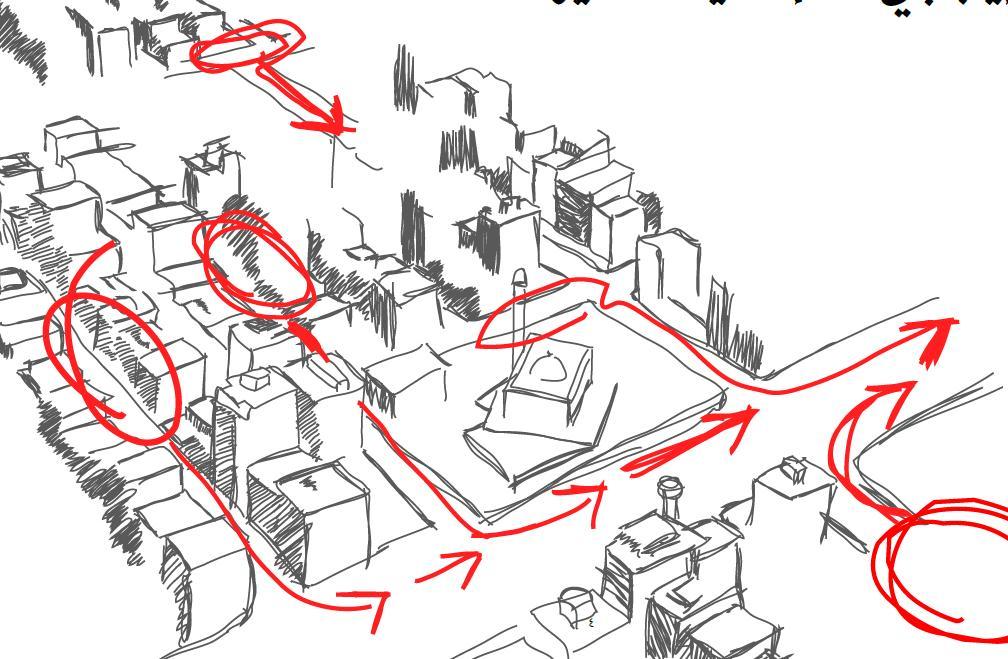
The following is research published today from MEMRI’s Special Dispatch Series and the MEMRI TV Project. Special Dispatch No. 3551—Egypt In the recent days, Egyptian activists have been circulating an anonymously written pamphlet titled" How to Protest Intelligently: Important Information and Tactics." The authors ask not to post the manual on Facebook or Twitter, which are monitored by the security forces, but to distribute it by e-mail or copy it and distribute by hand. Following are details and excerpts: The pamphlet, a tactical guide for individuals and small groups who wish to take part in the protests, is written in simple language and in secular (rather than Islamic) terms. The authors see themselves as representing "the Egyptian people" and identify the enemy as the Mubarak regime and the security forces. The general message is that the revolution must be carried out by peaceful means, through civil resistance and non-violent protest. The manual provides instructions for organizing protests and choosing their location, and on holding demonstrations and responding to various actions by the security forces. The text is accompanied by illustrations, satellite images (downloaded from Google Earth) and diagrams. Diagram explaining how to hold a march: small groups start in different locations and converge To read the full report, visit http://www.memri.org/report/en/0/0/0/0/0/0/4964.htm. Special Dispatch No. 3550—Egypt Cartoons published in the Arab press in response to the current wave of protests in Egypt and in the Arab world at large addressed the causes of the protests, the responses of the Arab leaders to them, and the anticipated fate of these leaders, as well as the reaction of the Americans to the protests and the key role played by the Internet in facilitating them. The following is a sample of cartoons: Unemployment, corruption, poverty, violence, ignorance, backwardness and oppression fuel unrest in the Arab street A desperate Arab world puts itself on fire To read the full report, visit http://www.memri.org/report/en/0/0/0/0/0/0/4963.htm. Special Dispatch No. 3549—Egypt/Kuwait/Inter-Arab Relations In a February 1, 2011 in the Kuwaiti daily Arab Times, titled "Not This Way," Ahmad Al-Jarallah, who is editor-in-chief of the paper and also of the Kuwaiti daily Al-Siyassa, discussed the events in Egypt. The following is his article, in the original English. "Asking Egyptians to organize peaceful demonstrations to fight corruption and corrupt officials, as well as call for change in the government, is a constitutional demand, which usually happens in every part of the world. Citizens in democratic nations have right to freedom of expression. In advanced democratic settings, this right is often exercised in a peaceful and calm manner without violating the Constitution. This was the same pattern followed by the youth movement at the beginning of the demonstrations but everything has been blown out of proportion and surprisingly snowballed into an unprecedented breakdown in law and order." To read the full report, visit http://www.memri.org/report/en/0/0/0/0/0/0/4962.htm.
MEMRI Daily – Crisis in the Middle East Series: February 1, 2011
The Middle East Crisis Part VIII - Egyptians Circulate Manual for Protesters
The Middle East Crisis Part VII - Cartoons on Wave of Protest in Arab World

Al-Arab (Qatar), January 29, 2011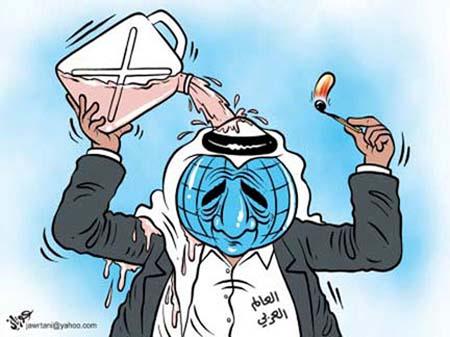
Filastin (Gaza), January 30, 2011The Middle East Crisis Part VI - Kuwaiti Newspaper Editor: Iran, Hizbullah Are Supporting the Unrest In Egypt
Tuesday, 1 February 2011


 Posts
Posts

