
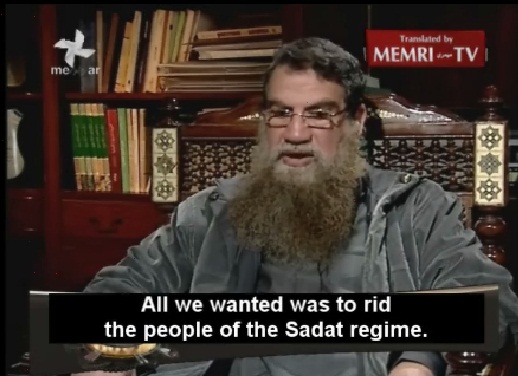
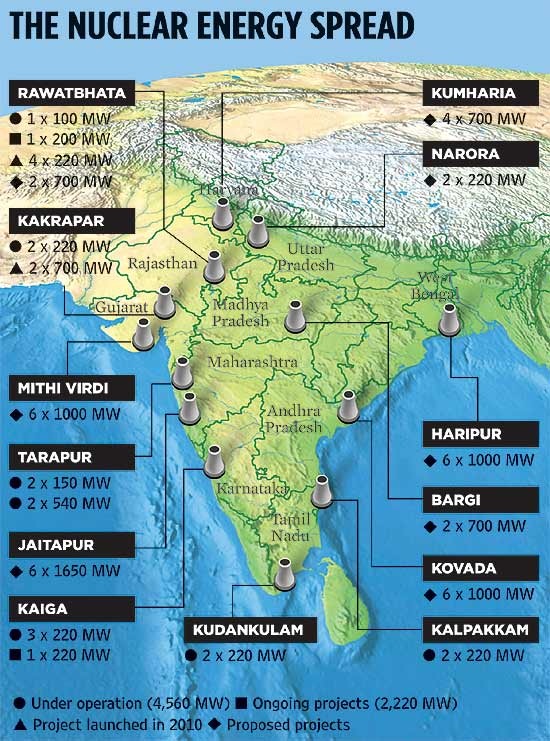
The following is research published today from MEMRI’s Special Dispatch Series and the MEMRI TV Project. Special Dispatch No. 3708—Egypt Following are excerpts from several TV interviews with Abboud Al-Zumar, a leader in the Egyptian Islamic Jihad Organization, who was imprisoned for complicity in the assassination of Egyptian president Anwar Sadat and was recently pardoned by the Egyptian Armed Forces Supreme Council. The interviews aired on various Egyptian TV channels on March 14, 2011. To view the clip on MEMRI TV, visit http://www.memritv.org/clip/en/0/0/0/0/0/0/2868.htm. Abboud Al-Zumar: "I'd like to apologize to the Egyptian people [for the assassination of Sadat], because we did not intend to bring Hosni Mubarak to power. Our goal was to bring about change, and to deliver the Egyptian people from the conditions it found itself in. All we wanted was to rid the people of the Sadat regime. We were hoping that a better regime would replace it, but the outcome was that a worse regime came to power. For this, we apologize. Our intentions were to benefit this society." [...] To read the full report, visit http://www.memri.org/report/en/0/0/0/0/0/0/5139.htm. Special Dispatch No. 3707—South Asia Studies Project/India Following the Fukushima nuclear crisis, triggered by the March 11, 2011 earthquake and tsunami in Japan, there are increasing concerns over developing countries' ability to handle safety and security issues at nuclear plants. An Indian magazine recently published a report, examinining safety issues at the nuclear plants situated in various Indian states. These concerns over India's nuclear plants come amid the Indian government's massive efforts to boost its nuclear energy production following the Indo-U.S. nuclear agreement. That agreement forced India to open 14 of its 20 nuclear plants to international inspection. However, there are concerns that India will be building new nuclear plants and some of them are to be based at sites near to earthquake zones. The report, published by the Outlook weekly magazine, quoted several experts expressing concern over lack of transparency about safety issues at nuclear plants in India. It also published a list of nuclear-related incidents at various nuclear plants, as given below: To read the full report, visit http://www.memri.org/report/en/0/0/0/0/0/0/5138.htm. Special Dispatch No. 3706—South Asia Studies Project/Pakistan/Punjabi Militants In an interview conducted before CIA contractor Raymond Davis was released by Pakistan on March 16, 2011, former Pakistan Army chief General (retired) Mirza Aslam Beg granted an interview to the Urdu-language daily Roznama Ummat. In the interview, he answered several questions regarding the Raymond Davis issue, noting that this one issue has given Pakistan a diplomatic advantage and has put the U.S. under Pakistani pressure. General Beg added that the Pakistan-U.S. relations will not remain the same after Raymond Davis's release. In the interview, General Beg went on to allege that Raymond Davis was working for the intelligence agencies of four countries. He alleged that CIA and RAW (India's external intelligence Research & Analysis Wing) are responsible for terror attacks in Pakistani cities. The former Pakistan Army chief also alleged that Lashkar-e-Jhangvi, an Al-Qaeda affiliated Sunni jihadist organization, and the Sipah-e-Sahaba Pakistan (which is the mother of Pakistani Sunni militant groups), were created on the advice of the U.S. Regarding a question about Punjab Chief Minister Shahbaz Sharif's recent objection to the use of the expression "Punjabi Taliban," General Beg said that Punjabi Taliban were responsible for the attack on Pakistan Army headquarters in Rawalpindi a few years ago, and also noted that the Punjabi Taliban and the Frontier Taliban (a reference to Pashtun Taliban) exist in the Pakistani border region. To read the full report, visit http://www.memri.org/report/en/0/0/0/0/0/0/5137.htm.Egyptian Islamist Abboud Al-Zumar Apologizes for Sadat Assassination: We Did Not Mean to Bring Mubarak to Power
After the Fukushima Nuclear Crisis, Indian Website Examines the Safety Record of Indian Nuclear Plants
Former Pakistan Army Chief General Aslam Beg: Raymond Davis was 'Working as a Coordinator of Four Important Foreign Secret Agencies in Our Country'
Sunday, 27 March 2011


 Posts
Posts

