
Posted: 30 Jan 2011 07:24 PM PST It's no coincidence that major revolutions against Western backed governments have occurred under weak American presidents. The Iranian revolution against the Shah happened on Jimmy Carter's watch. The current violence in Tunisia and Egypt is taking place under Obama. And the timing is quite interesting. Revolts which coincided with a new opposition congress almost suggest that they were scheduled for a time when Obama would be at his politically weakest. Daniel Greenfield article:
Obama Loses the Middle East
Tuesday, 1 February 2011



JERUSALEM – The Egyptian government has information a diplomat at the U.S. embassy in Cairo secretly met yesterday with a senior leader of the Muslim Brotherhood, the nation's major Islamist opposition group, WND has learned. The topic of the meeting was the future of Egypt following the "fall" of President Hosni Mubarak, an Egyptian intelligence official told WND. Theclaimcomes amid charges from Cairo that the Obama administration has been encouraging the protests rocking Egypt and targeting the rule of Mubarak, a key U.S. ally in the Middle East. The Egyptian intelligence official told WND his government has information of a meeting that took place yesterday between Issam El-Erian, a senior leader of the Muslim Brotherhood, and Frank Wisner, a former U.S. ambassador to Egypt. The Obama administration dispatched Wisner to Egypt this past weekend to report to theState Departmentand White House a general sense of the situation in the embattled country. The Egyptian intelligence official speaking to WND said the meeting took place inside the American embassy in Cairo The U.S.State Departmentwould neither confirm nor deny the report. The Muslim Brotherhood seeks to spread Islam around the world, in large part using nonviolent means. Hamas and al-Qaida are violent Brotherhood offshoots. Thelatestinformation is not the first charge by the Egyptian government that the Obama administration has beenworking withor encouraging the opposition to Mubarak. Last week,a senior Egyptian diplomat stated the Egyptian government suspectselements of the current uprising there, particularly political aspects, are being coordinated with the U.S.State Departmentand Obama administration. The senior Egyptian diplomat told WND the Mubarak regime suspects the U.S. has been aiding protest planning by Mohamed ElBaradei, who is seen as one of the main opposition leaders in Cairo. ElBaradei, former International Atomic Energy Agency chief, has reinvented himself as a campaigner for "reform" in Egypt. He is a candidate for this year's scheduled presidential elections. ElBaradei arrived in Cairo just after last week's protests began and is reportedly being confined to his home by Egyptian security forces. He is seen as an ally of the Muslim Brotherhood. This past weekend, theLondonTelegraph reported the U.S. embassy in Cairo in 2008 helped a young dissident attend a U.S.-sponsored summit for activists in New York, while working to keep his identity secret from Egyptian state police. The Telegraph would not identify the dissident, but said he was involved in helping to stir the current protests. The report claimed the dissident told the U.S. embassy in Cairo that anallianceof opposition groups had a plan to topple Mubarak'sgovernment. The disclosures, contained in U.S. diplomatic dispatches released by the WikiLeaks website, show American officials pressed the Egyptian government to release other dissidents who had been detained by the police. The White House has been almost openly championing the unrest in Egypt. Secretary of State Hillary Clinton called for an "orderly transition" to democracy in Egypt, where the Muslim Brotherhood is the main opposition group. Obama reportedly voiced support for an "orderly transition" in Egypt that is responsive to the aspirations of Egyptians in phone calls with foreign leaders, the White House said. Deputy National Security Adviser Denis McDonough, speaking in a White House webcast, also urged the government and protesters in Egypt to refrain from violence. Egyptian officials speaking to WND, however, warned the Muslim Brotherhood has the most to gain from any political reform. Related Offers: The Politically Incorrect Guide to Islam and the Crusades The Islamic Antichrist (Autographed) (Hardcover) The Nazi Connection to Islamic Terrorism (Autographed) (Paperback) Why We Left Islam: Former Muslims Speak Out - (Hardcover) Muslim Mafia: Inside the Secret Underworld That's Conspiring to Islamize America - (Hardcover) Previous stories: 'Something big' transferred to Gaza Strip Worldwide Islamist revolution explodes Egypt blames U.S. for fomenting uprising Did 'successor' to Egyptian president flee country? Islamists behind 'popular protests' topping Arab regimes Canadians turn back Iranian demand to kill film Cop, unprovoked, shoots Christian on train Death sentences feared for Afghan converts Muslims being 'appeased' by crackdown on Christianity Analyst: Pakistani marked for death for support of Christian Guess who leads surge in Christian persecution No. 1 persecutor tests weapons on Christians Behead a Christian, raise your rank Iraqi Christians urged to return to homeland Islamists drive Christians out of Nineveh Mutilated Christian girl, 10, forgives attackers Going rate to kill pastor: $250

U.S. 'held secret meeting with Muslim Brotherhood
Discussed fall of Egypt with group dedicated to Islam's global spread
Posted: February 01, 2011
10:59 am Eastern
Barack Obama
© Arlene Kushner. This material is produced by Arlene Kushner , functioning as an independent journalist. Permission is granted for it to be reproduced only with proper attribution 
"According to a Pew opinion survey of Egyptians from June 2010, 59 percent said they back Islamists. Only 27% said they back modernizers. Half of Egyptians support Hamas. Thirty percent support Hezbollah and 20% support al Qaida. Moreover, 95% of them would welcome Islamic influence over their politics. When this preference is translated into actual government policy, it is clear that the Islam they support is the al Qaida Salafist version.
"Eighty two percent of Egyptians support executing adulterers by stoning, 77% support whipping and cutting the hands off thieves. 84% support executing any Muslim who changes his religion."
A shocking admission from one of the world's top central bankers
- "In 2011, real wages are likely to be no higher than they were in 2005… One has to go back to the 1920s to find a time when real wages fell over a period of six years."
- "The squeeze on living standards is the inevitable price to pay for the financial crisis and subsequent rebalancing of the world and UK economies."
- Furthermore, inflation may rise "to somewhere between four per cent and five per cent over the next few months."
- "[U]npleasant though it is, the Monetary Policy Committee neither can, nor should try to, prevent the squeeze in living standards, half of which is coming in the form of higher prices and half in earnings rising at a rate lower than normal."
- "I sympathize completely with savers and those who behaved prudently now find themselves among the biggest losers from this crisis."
To summarize, one of the world's leading central bankers has looked his country in the eye and admitted that he is completely powerless to prevent the inevitable decline in living standards that will result from years of reckless behavior.
It’s amazing that someone in his position would be so terse, so direct in his appraisal of the situation; by nature of their positions, central bankers are serial liars who must continually deceive the public in order to set expectations and carry out their agenda.
King’s statement may be a sign that England is finally on its last leg. Fiscally, the country is in a similar situation as the US and Europe– in debt up to its eyeballs, hemorrhaging cash, and quickly losing the confidence of the international community.
Unlike Europe, the US, and even Japan to a degree, England lacks reserve currency status in any measure that matters… so without a line of foreigners to buy its debt regardless of the fundamentals, the UK has been forced into its day of reckoning before the others.
Meanwhile, Europe and the US continue to spin unjustified confidence; Angela Merkel and Nicolas Sarkozy have pinkie-sworn that they will not let the euro fail, and Barack Obama’s State of the Union address provided a temporary ‘feel-good’ blip that the government is going to fix everything.
People should not be fooled, however, into thinking that the US, Europe, Japan (and those nations which depend heavily upon them) will fare any better than England.
Because of its place in the global pecking order, England has less control over its financial destiny and has had to face the music first, but it will not be the only member of the Western hierarchy to fall.
Europe is in a desperate situation to continue bailing out bankrupt members of the eurozone even though the price tag will soon become larger than the monetary union can possibly bear, all while stimulus pressures and strained pension programs create challenges even for the ‘healthy’ euro nations.
Meanwhile in the US, the government plans to continue running trillion dollar deficits for the next several years with no end in sight to runaway spending, not even considering the upcoming carnage that will occur when cities and states start to go bust, or social security runs out of money.
Japan is probably in the worst shape of all, simultaneously suffering both a fiscal and demographic crisis. Japan’s debt, well over 100% of its GDP, has already been downgraded by the rating agency monkeys, and its population is slowly disappearing due to low birth rates and inhospitable immigration policy.
The best case that these countries can hope for is to suffer the same fate as England: a significant reduction in standard of living.
There is an opportunity now, however, for everyone to assess their basic vulnerabilities and take steps to mitigate what may lie ahead. This may include seeking work overseas, expanding a business to broader services in new markets, moving assets to safer jurisdictions, reducing system dependency, etc.
Read full article...
More government stupidity:
Porter Stansberry: Our government is in imminent danger
Former Fed governor: Federal Reserve is "one step away from being bankrupt"
Shocking admission from Tim Geithner: U.S. on the brink of catastrophic collapse
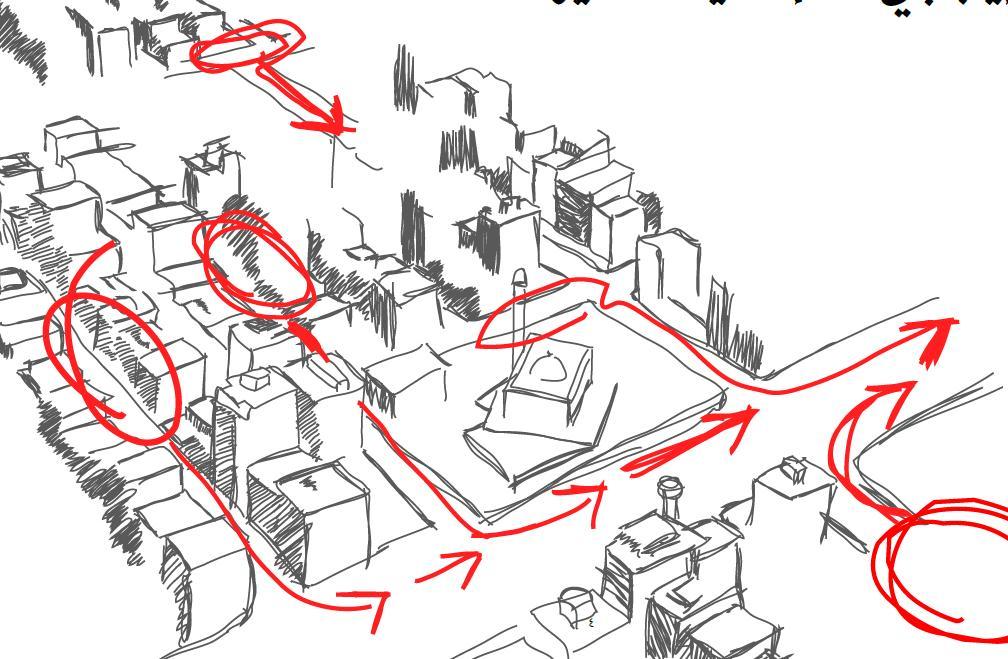
The following is research published today from MEMRI’s Special Dispatch Series and the MEMRI TV Project. Special Dispatch No. 3551—Egypt In the recent days, Egyptian activists have been circulating an anonymously written pamphlet titled" How to Protest Intelligently: Important Information and Tactics." The authors ask not to post the manual on Facebook or Twitter, which are monitored by the security forces, but to distribute it by e-mail or copy it and distribute by hand. Following are details and excerpts: The pamphlet, a tactical guide for individuals and small groups who wish to take part in the protests, is written in simple language and in secular (rather than Islamic) terms. The authors see themselves as representing "the Egyptian people" and identify the enemy as the Mubarak regime and the security forces. The general message is that the revolution must be carried out by peaceful means, through civil resistance and non-violent protest. The manual provides instructions for organizing protests and choosing their location, and on holding demonstrations and responding to various actions by the security forces. The text is accompanied by illustrations, satellite images (downloaded from Google Earth) and diagrams. Diagram explaining how to hold a march: small groups start in different locations and converge To read the full report, visit http://www.memri.org/report/en/0/0/0/0/0/0/4964.htm. Special Dispatch No. 3550—Egypt Cartoons published in the Arab press in response to the current wave of protests in Egypt and in the Arab world at large addressed the causes of the protests, the responses of the Arab leaders to them, and the anticipated fate of these leaders, as well as the reaction of the Americans to the protests and the key role played by the Internet in facilitating them. The following is a sample of cartoons: Unemployment, corruption, poverty, violence, ignorance, backwardness and oppression fuel unrest in the Arab street A desperate Arab world puts itself on fire To read the full report, visit http://www.memri.org/report/en/0/0/0/0/0/0/4963.htm. Special Dispatch No. 3549—Egypt/Kuwait/Inter-Arab Relations In a February 1, 2011 in the Kuwaiti daily Arab Times, titled "Not This Way," Ahmad Al-Jarallah, who is editor-in-chief of the paper and also of the Kuwaiti daily Al-Siyassa, discussed the events in Egypt. The following is his article, in the original English. "Asking Egyptians to organize peaceful demonstrations to fight corruption and corrupt officials, as well as call for change in the government, is a constitutional demand, which usually happens in every part of the world. Citizens in democratic nations have right to freedom of expression. In advanced democratic settings, this right is often exercised in a peaceful and calm manner without violating the Constitution. This was the same pattern followed by the youth movement at the beginning of the demonstrations but everything has been blown out of proportion and surprisingly snowballed into an unprecedented breakdown in law and order." To read the full report, visit http://www.memri.org/report/en/0/0/0/0/0/0/4962.htm.
MEMRI Daily – Crisis in the Middle East Series: February 1, 2011
The Middle East Crisis Part VIII - Egyptians Circulate Manual for Protesters
The Middle East Crisis Part VII - Cartoons on Wave of Protest in Arab World

Al-Arab (Qatar), January 29, 2011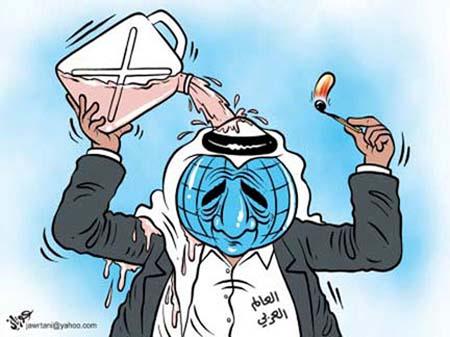
Filastin (Gaza), January 30, 2011The Middle East Crisis Part VI - Kuwaiti Newspaper Editor: Iran, Hizbullah Are Supporting the Unrest In Egypt
Yet more indication that Obama actively favors the Muslim Brotherhood's coming to power in Egypt. "U.S. 'held secret meeting with Muslim Brotherhood,'" by Aaron Klein for WorldNetDaily, February 1 (thanks to all who sent this in): The topic of the meeting was the future of Egypt following the "fall" of President Hosni Mubarak, an Egyptian intelligence official told WND. The claim comes amid charges from Cairo that the Obama administration has been encouraging the protests rocking Egypt and targeting the rule of Mubarak, a key U.S. ally in the Middle East. The Egyptian intelligence official told WND his government has information of a meeting that took place yesterday between Issam El-Erian, a senior leader of the Muslim Brotherhood, and Frank Wisner, a former U.S. ambassador to Egypt.... The Muslim Brotherhood seeks to spread Islam around the world, in large part using nonviolent means. Hamas and al-Qaida are violent Brotherhood offshoots. The latest information is not the first charge by the Egyptian government that the Obama administration has been working with or encouraging the opposition to Mubarak. Last week, a senior Egyptian diplomat stated the Egyptian government suspects elements of the current uprising there, particularly political aspects, are being coordinated with the U.S. State Department and Obama administration. The senior Egyptian diplomat told WND the Mubarak regime suspects the U.S. has been aiding protest planning by Mohamed ElBaradei, who is seen as one of the main opposition leaders in Cairo.... The White House has been almost openly championing the unrest in Egypt. Secretary of State Hillary Clinton called for an "orderly transition" to democracy in Egypt, where the Muslim Brotherhood is the main opposition group. Obama reportedly voiced support for an "orderly transition" in Egypt that is responsive to the aspirations of Egyptians in phone calls with foreign leaders, the White House said.... Egyptian officials speaking to WND, however, warned the Muslim Brotherhood has the most to gain from any political reform. Big surprise. He has behaved consistently all along, from his refusal to back the protesters in Iran, who were demonstrating against an Islamic Republic, to his backing of these protesters in Egypt, to whom he has just given a green light to establish an Islamic Republic. In The Post-American Presidency, Pamela Geller and I profile Robert Malley, Samantha Power, and other fierce foes of Israel in the Obama Administration. In light of the information we reveal there, this comes as no surprise. "U.S. open to a role for Islamists in new Egypt government," by Paul Richter and Peter Nicholas in the Los Angeles Times, January 31 (thanks to Benedict): The organization must reject violence and recognize democratic goals if the U.S. is to be comfortable with it taking part in the government, the White House said. But by even setting conditions for the involvement of such nonsecular groups, the administration took a surprise step in the midst of the crisis that has enveloped Egypt for the last week. The statement was an acknowledgment that any popularly accepted new government will probably include groups that are not considered friendly to U.S. interests, and was a signal that the White House is prepared for that probability after 30 years of reliable relations with Egyptian President Hosni Mubarak. Monday's statement was a "pretty clear sign that the U.S. isn't going to advocate a narrow form of pluralism, but a broad one," said Robert Malley, a Mideast peace negotiator in the Clinton administration. U.S. officials have previously pressed for broader participation in Egypt's government. The George W. Bush administration pushed Mubarak for democratic reforms, but a statement in 2005 by then-Secretary of State Condoleezza Rice did not specifically address a role for Islamists. "This is different," said Malley, now with the International Crisis Group. "It has a real political edge and political meaning." White House spokesman Robert Gibbs said that a reformed government "has to include a whole host of important nonsecular actors that give Egypt a strong chance to continue to be [a] stable and reliable partner." [...] The National Security Council officials -- Ben Rhodes, Samantha Power and Daniel Shapiro -- were reluctant to discuss Mubarak's fate. The White House has settled on the message that it is up to Egyptians to choose their government and that the U.S. should not be seen as picking the country's leaders.... But they shouldn't be. Obama is behaving consistently. He declined to speak out in favor of the Iranian protesters who were demonstrating against an Islamic regime. He is now abandoning Mubarak in favor of protesters who will likely pave the way for an Islamic regime. "Israel shocked by Obama's 'betrayal' of Mubarak," by Douglas Hamilton for Reuters, January 31: Political commentators expressed shock at how the United States as well as its major European allies appeared to be ready to dump a staunch strategic ally of three decades, simply to conform to the current ideology of political correctness. Prime Minister Benjamin Netanyahu has told ministers of the Jewish state to make no comment on the political cliffhanger in Cairo, to avoid inflaming an already explosive situation. But Israel's President Shimon Peres is not a minister. "We always have had and still have great respect for President Mubarak," he said on Monday. He then switched to the past tense. "I don't say everything that he did was right, but he did one thing which all of us are thankful to him for: he kept the peace in the Middle East." Newspaper columnists were far more blunt. One comment by Aviad Pohoryles in the daily Maariv was entitled "A Bullet in the Back from Uncle Sam." It accused Obama and his Secretary of State Hillary Clinton of pursuing a naive, smug, and insular diplomacy heedless of the risks. Who is advising them, he asked, "to fuel the mob raging in the streets of Egypt and to demand the head of the person who five minutes ago was the bold ally of the president ... an almost lone voice of sanity in a Middle East?" "The politically correct diplomacy of American presidents throughout the generations ... is painfully naive." Obama on Sunday called for an "orderly transition" to democracy in Egypt, stopping short of calling on Mubarak to step down, but signaling that his days may be numbered.... The message from Obama comes as Mubarak reportedly prepares to address his country. Al Arabiya reports that the 30-year ruler of Egypt will use the address to announce he will not run for another term. Whether that will placate demonstrators remains to be seen. But the Obama administration has been holding talks to make clear Washington's desire for a peaceful transition, according to State Department spokesman P.J. Crowley. U.S. Ambassador to Egypt Margaret Scobey met with opposition leaderMohamed ElBaradei in Cairo to convey that message. Crowley described the meeting as "part of our public outreach to convey support for orderly transition in Egypt." John Bolton, former U.S. ambassador to the United Nations, said the test for Egypt will be whether the Egyptian demonstrators accept Mubarak as their president through the end of the year. Otherwise, he said, the country could be thrown back into "crisis." According to The New York Times, the message from Obama was delivered by former diplomat Frank Wisner. And at the Pentagon, officials said Defense Secretary Robert Gates conferred by phone with his Egyptian counterpart, Field Marshal Hussein Tantawi. Also Tuesday, the State Department ordered nonessential U.S. personnel to leave Egypt. The order replaces an initial decision last week to allow nonessential workers who wanted to leave the country to do so at government expense. The department said it would continue to evacuate private U.S. citizens from Egypt aboard government-chartered planes. The administration has thus far confined its public comments on the anti-government protests in Egypt to calls for restraint, reforms and a transition to a real democracy. As the protests against Mubarak's three-decade rule escalated on Tuesday, the chairman of the powerful Senate Foreign Relations Committee, Sen. John Kerry, a Democrat, gave public voice to what senior U.S. officials have said only privately in recent days: that Mubarak should "step aside gracefully to make way for a new political structure." "It is not enough for President Mubarak to pledge `fair' elections," Kerry wrote in The New York Times. "The most important step that he can take is to address his nation and declare that neither he nor the son he has been positioning as his successor will run in the presidential election this year. Egyptians have moved beyond his regime, and the best way to avoid unrest turning into upheaval is for President Mubarak to take himself and his family out of the equation." Egypt's army leaders are reassuring the United States that the powerful military does not intend to crack down on demonstrators, but is instead allowing the protesters to "wear themselves out," according to a former U.S. official in contact with several top Egyptian army officers. The Egyptians use a colloquial saying to describe their strategy -- that a boiling pot with a lid that is too tight will blow up the kitchen, the official said, speaking on condition of anonymity to discuss private conversations. That was always the argument that Egyptian intelligence chief Omar Suleiman, who Mubarak tapped as his vice president on Friday, made regarding the handling of the Gaza border crossing point every time visiting U.S. officials asked their counterparts to stop the smuggling from Egypt to the Gaza Strip: that the best way to head off Gaza unrest is to allow a relief valve that permitted them to bring in supplies. The Egyptian officers expressed concern with some of the White House statements that side with the protesters, saying that stoking revolt to remove Mubarak could create a vacuum that the banned but powerful Muslim Brotherhood could fill, the official said. While the Brotherhood claims to have closed its paramilitary wing long ago, it has fought politically to gain power, and more threatening to the Mubarak regime, has built a nationwide charity and social network that much of Egypt's poverty stricken population depends on for its survival. Col. David Lapan, a Pentagon spokesman, said the U.S. military remains ready to help get Americans out of Egypt if asked but so far has received no requests. On Monday, the U.S. evacuated more than 1,200 Americans from Cairo on such flights and said it expected to fly out roughly 1,400 more in the coming days. Monday's flights ferried Americans from Cairo to Larnaca, Cyprus; Athens, Greece; and Istanbul, Turkey. On Tuesday, the department expects to add Frankfurt, Germany, as a destination. It also hopes to arrange evacuation flights from the Egyptian cities of Aswan and Luxor. The Associated Press contributed to this report. He does plan to stay in office until then to meet the demands of the protesters. Al-Jazeera reports that the Egyptian Embassy in Tel Aviv is making preparations to welcome him into exile....JERUSALEM - The Egyptian government has information a diplomat at the U.S. embassy in Cairo secretly met yesterday with a senior leader of the Muslim Brotherhood, the nation's major Islamist opposition group, WND has learned.
The Obama administration said for the first time that it supports a role for groups such as the Muslim Brotherhood, a banned Islamist organization, in a reformed Egyptian government.
JERUSALEM (Reuters) - If Egypt's President Hosni Mubarak is toppled, Israel will lose one of its very few friends in a hostile neighborhood and President Barack Obama will bear a large share of the blame, Israeli pundits said on Monday.
Ostensibly knowing everything I wrote in that post, the Obama administration is encouraging making the Muslim Brotherhood a part of the post-Mubarak government in Egypt (Hat Tip: Gates of Vienna, who has lots more comments here).The Obama administration said Monday for the first time that it supports a role for groups such as the Muslim Brotherhood, a banned Islamist organization, in a reformed Egyptian government.
If those conditions sound familiar, they should. They parallel the conditions for acceptance of Hamas as a legitimate actor in the Israeli-'Palestinian' conflict (acceptance of Israel's right to exist, acceptance of past agreements, renunciation of violence). And they represent a radical departure from the United States' statement two weeks ago that it would cut off all assistance to Lebanon if a new government was formed by a Hezbullah-led block.
The organization must reject violence and recognize democratic goals if the U.S. is to be comfortable with it taking part in the government, the White House said. But by even setting conditions for the involvement of such "nonsecular" groups, the administration took a surprise step in the midst of the crisis enveloping Egypt for the past week.
Furthermore, even if the Brotherhood accepted these conditions, why should they be believed? Hasn't the Obama administration heard of taqiyya?
What the US should be doing is saying, "while we have no control over what the Egyptian people decide, we will not continue to financially assist a government which abrogates any of its treaty obligations with Israel, or which includes any Islamist or other repressive party." That would square with what the US has done (and should be doing) in Lebanon (with Hezbullah) and in Gaza (with Hamas).White House spokesman Robert Gibbs said a reformed government "has to include a whole host of important nonsecular actors that give Egypt a strong chance to continue to be (a) stable and reliable partner."
If anything, the opposite is true. If a 'reformed government' includes certain non-secular actors - like the Brotherhood - there is virtually no chance that it will ever be a stable and reliable partner for anything.The Muslim Brotherhood is the largest and best-organized Egyptian opposition group, with an estimated 600,000 members, many of them educated, middle-class men. It has disavowed terrorism and violence, but its inclusion in any government would likely be deeply controversial among U.S. allies, especially in Israel, because it advocates tearing up Egypt's peace treaty with the Jewish state.
So now we are expected to believe that there is a difference between the Brotherhood's 'political' and 'military' 'wings,' as some would have us believe aboutHezbullah? Maybe we can rename Hamas' Izzedein al-Qassam as the Brotherhood's 'military wing'?
What could go wrong? Here comes the Brotherhood, and war with Israel
It was inevitable, and now it is about to happen -- after an Obama envoy told Mubarak to go. Of course, he has named a successor and the old regime will try to continue, but its days are numbered. "Egyptian President Mubarak Will Reportedly Step Down," from Fox News, February 1:CAIRO - President Hosni Mubarak is expected to say in a speech Tuesday night that he plans on stepping down at the next election scheduled in September, according to Reuters.


 Posts
Posts

