 | | The Daily Reckoning | Tuesday, June 12, 2012 |
- Europe: “An allegory for the ages of men,”
- Attack of the Dollar Shrinkers...and how you can fight back,
- Plus, Bill Bonner on the Argentine example and plenty more...
-------------------------------------------------------
World oil production is about to be shaken to its core...
You won’t believe which nation analysts at Wall Street’s biggest banks expect to become the world’s biggest energy producer by 2017 — or the effect it will have on America... our economy... our future...
Click here to see who is set to become the new king of oil — and how you can use the news to go for big profits as early as this MAY!
|  | | | | Fiscal Insanity | | Printing Money Over and Over Again, Expecting Different Results | | |  | | Joel Bowman |
Checking in today from Buenos Aires, Argentina...
Money printing; All governments do it eventually. It is their fate...and, so long as we are beholden to them, ours too.
Some, like the Germans, learn from lessons past. They know the woes of hyperinflation...and the political horror to which an economic crisis can lead. And so, they are seen to resist. Against calls today for “monetary easing” in the eurozone, they remain firm. In spite of cries for “loosening,” Frau Merkel holds back on the monetary levers. For now, anyway...
Other governments, like the prattling kleptocrats here in Argentina, prefer to simply ignore history...and with it the laws of economics. Instead, they simply lie, flat out, to their populace. They make statements like, “It is totally false to say that printing more money generates inflation.” And they say this, Fellow Reckoner, with a straight face. No joke! This, from a country that has burned through five currencies in the past 70 years.
Nobody here actually believes their elected officials, of course, but they vote them in anyway...probably under some delusion of “civic duty.” People march down to the ballot box, waving a blue and white flag, banging on casserole dishes and demanding change. Then they carefully replace the old crooks with new crooks, much the same as what happened in the last election in the US. Then, the political class loots the people’s accounts. They make out like bandits, while the rest survive on “futbol para todos.” It’s strange, yes...but it’s the way it goes just the same.
And then there are the Americans north of the Rio Grande, whose government prefers to dress its printing up in fancy names. They try to bamboozle the crowd with academic-sounding terms like Quantitative Easing and Operation Twist. The average man on the street has no idea what these terms mean. But he trusts his Dear Leaders because he is told to trust them. He swore an allegiance to the flag every morning while in school...and he takes this more seriously than his own common sense, long since abandoned.
Republicans...Democrats...Bernanke...Greenspan. No matter. It’s the same people pulling the same old tricks. Aside from faces and names, there is no change. It’s an illusion, designed to make the audience think they have a say in what happens on stage. But the script has already been written. And this is a rerun.
Call it QE, Call it Twist. Call arguments from the opposition “totally false.” In the end, the result is always the same. A shrinking currency...inflation...the ultimate in centrally organized counterfeiting on the grandest of scales.
But while the Germans and Argentines are old hats at this, the Yanquis may not be quite hip to the game. In other words, they’ve got a thing or two to learn about shrinking dollars. Recently, Samantha Buker, co-author with Addison Wiggin of The Little Book of the Shrinking Dollar, appeared on The Street to explain.
In the following column, Jeffrey Tucker of Laissez Faire Books unpacks Sam and Addison’s “Little Book.” Beware the dollar shrinkers, Fellow Reckoner! And read on...
| | | | From Jim Rogers... to Marc Faber... to Congressman Ron Paul, this book is sitting on the desks of some of the world’s smartest thinkers...
And for good reason, too.
Inside you’ll find 47 ways to protect your wealth from the declining value of the U.S. Dollar
Discover FIVE of those 47 ways for free, right here.
|
| |
| | The Daily Reckoning Presents | | Small Package, Tons of Truth | | |  | | Jeffrey Tucker |
Economic trends today are a litany of awful: high personal debt, stratospheric government debt, persistent trade deficits, declining living standards, government out of control, cycles of bubbles, zero return on savings, unemployment, and the ever-higher cost of living.
Everyone complains about these all the time. They make it hard to live a normal life. They produce vast anxiety. Some in this list are wrecking lives every day. They make us feel trapped with no options. And the problems are mounting by the day. Solutions seem beyond the political system as we know it.
What if all these problems have the same fundamental cause, the same root? This is the argument of Addison Wiggin and Samantha Buker in their fantastic book The Little Book of the Shrinking Dollar. There is a lot of truth packed in these pages. It is just about the best primer on the problem I’ve ever seen. I take it back: It is the best primer on the subject now in print.
While reading, I kept thinking this is the book I’ll give Mom, my neighbor, my dentist, that guy at the church who puzzles about economics and my outlook in particular, and maybe I need a stack of them to hand out to people who are deeply frustrated about the way things are going.
To find the answers to today’s burning economic questions, it is not enough to watch the business news or comb through the papers. Nor should it be necessary to plough through a 1,000-page treatise to figure out what’s wrong with the world. Wiggin and Buker explain all the essential points and connect the dots between many seemingly disparate problems, but in a small and entertaining book. And the answers make sense.
The merit of this book is that it ties all these far-flung things together and points to a unified cause. As they argue, these are not acts of nature or historical accidents that just so happen to be visited upon this generation. The dollar, for example, is shrinking for a specific institutional reason. So it is with the bubbles, the debt, the rising prices, the stock market instability and the falling living standards. Wiggin and Buker manage to explain them all in an analytically rigorous way that doesn’t put the reader to sleep.
Here’s the key thing. Something absolutely game changing happened in 1971. The dollar was untied from its last link to gold. The regime proclaimed it to be a new day. No more golden fetters! From now on, money would be backed by nothing but itself. Just paper, nothing more. The age of liquidity had arrived!
This was just one of many awful political decisions made by the Nixon administration, and there is no evidence that the administration thought it would turn out to be that significant.
But the problems started immediately. They could be summed up in one word: inflation, meaning a constantly falling purchasing power of money. But that was just the beginning. The problems grew and grew, and the issues spread like a disease, eventually affecting the whole of life.
And here we are 41 years later and the problems are spreading and are too numerous to list. The solution is to make the money sound again and eliminate impediments to economic adjustment, but these ideas are regarded as too drastic and far flung. To solve the problem is not a technical one; instituting a gold standard or permitting competing currencies or allowing private alternatives to the dollar are all great ideas that could be put in place without much trouble. The real problem is that none of these solutions would not benefit the elites; on the contrary, the solutions to our problem would unseat the elites.
As a result, the spreading of the problem gets ever worse.
It’s like that scene in the Dr. Seuss book The Cat in the Hat Comes Back. Think of the pink color as fiat money. As Wikipedia describes the plot:
“The mother has left Sally and her unnamed brother alone for the day, but this time, they are instructed to clear away a huge amount of snow while she is out. While they are working, the cat turns up and snacks on a cake in the bathtub with the water running, and leaves a pink residue. Preliminary attempts to clean it up fail, as they only transfer the mess elsewhere, including a dress, the wall, a pair of $10 shoes, a rug, the bed and then eventually outside. The cat reveals that Little Cat A is nested inside his hat. Little Cat A doffs his hat to reveal Little Cat B, who reveals C and so on. A ‘spot killing’ war then takes place between the mess and Little Cats A through V, who use an arsenal of primitive weapons, including pop guns, bats and a lawn mower. Unfortunately, the initial battle to rid the mess only makes it into an entire yard-covering spot.” |
Paper money is that pink residue that is spreading and spreading. But unlike in The Cat in the Hat Comes Back, there is not Little Cat Z to clean up the mess before Mom gets home.
Government cannot and will not control spending so long as the money grows on trees courtesy of the Fed. The Fed will not stop printing so long as its sponsoring government needs more money. With the paper money proliferation comes ever more indebtedness on the part of individuals, business and government. With this comes cycle of booms and busts, with each bust being “cured” by more of the thing that made the boom happen in the first place. It is sheer madness, since debt on this level amounts to a serious interference with freedom itself.
I’ve waited a long time for someone to write a tract that covers all the problems that paper money causes in our time. There are so many, and it takes a sophisticated mind to put it all together and a talented writer to make the argument sparkle.
Consider this passage on the absurd heights of the federal debt, and the silly idea that getting the rich to pay more can cure the problem. Wiggin writes:
“...charming gesture from a dead man in Coral Gables, Fla. He left his home and $1 million in cash to the government — for the purpose of paying down the national debt. His 1929 Spanish-style home — 3,900 square feet, six bedrooms/five baths, in need of ‘updates’ — grossed $1.175 million at auction. The deceased’s generosity won’t go very far: Uncle Sam blew through his inheritance in less time than it took you to read about this — 17 seconds.”
That passage had me laughing out loud. Actually, there are passages on every page that just make your eyes pop. He is also a very challenging intellectual, offering surprises at every turn.
For example, he thinks that the Occupy Movement isn’t so bad after all, that deflation would be very much welcome, that it doesn’t matter that much which political party is in control, that nations can and will fully default on their loan portfolios, that the decline in American prosperity (in some forms) actually stretches back 60 years and that there is a case for renouncing your citizenship. There are provocative arguments like this on every page.
There is another feature of this book that makes it unique. It is not just about explaining how the world works. It is about treating the serious financial problems that people face right now. It is not easy to get a return on your money in today’s environment, but I’m pretty sure that if there are ways to do so, you will find them in this book. Every few pages, he offers a small call-out that is a financial workaround anyone can use.
In this sense, this book is actually very subversive. It explains things you aren’t supposed to know. It offers opinions that are not supposed to be spoken aloud. And it offers tricks and tips for getting around the problem. He writes as if he is convinced that there is always an escape hatch for a person who is determined not to get fleeced. He digs very deep to find these, and offers them to readers who are gracious enough to buy and spend time with this little gem of a book.
Personally, I can’t think of anyone who wouldn’t benefit from The Little Book of the Shrinking Dollar. The business page will never look the same, if you even bother to read it after soaking in all the pithy wisdom in these pages.
Regards,
Jeffrey Tucker,
for The Daily Reckoning
Editor’s Note: Condensing this kind of topic into a sub-300-page tome is, in itself, no small feat. But to do so without diminishing the severity of this situation (and offering some invaluable advice in the process), is nothing short of amazing. Brevity, it would seem, is the soul of both wit and fiscal responsibility. And the sentiment is catching...
Chuck Butler, President of EverBank World Markets, recently wrote to the subscribers of his Daily Pfennig newsletter, “I strongly recommend this book. And at [254] small pages, it’s a quick read. It’s all spelled out for you. Things I’ve talked about for years, and now it’s right here in a great book!”
And Chuck is not alone... From Jim Rogers to Marc Faber to Ron Paul... This book is making its rounds. See for yourself what all the talk is about. And if you act now, you can get your own copy absolutely free! No kidding. Click here for all the info.
| | | | | And now over to Bill Bonner, with the rest of today’s reckoning from Baltimore, Maryland... | | Learning from the Best: Inflation Lessons from Argentina | | |  | | Bill Bonner |
Spain was down again before we noticed it was up. Yesterday morning, stocks all over the world were rising on hopes of a solution to the euro problem. By afternoon, the rally was over. The Dow ended the day down 142 points.
But that’s the way the euro rescues go. The effects are more and more short-lived. Pretty soon, investors will realize they don’t work at all...and then there won’t be any up-surge, A new rescue plan will be announced. Investors will realize it is just another scammy fix. And stocks will go down.
When that happens the game will be over.
We might not be far from that point now.
Meanwhile, the US is worried too. About Europe, which is on the verge of total breakdown? Maybe. About China, which is growing at its slowest pace in 13 years? Maybe.
About the US itself...where the ‘recovery’ went missing? Almost certainly.
Here at our Daily Reckoning headquarters, we remain sans soucis. Which is another way of saying, we’re enjoying the show. What will the fixers do next, we wonder? Every fix makes things worse. But they keep at it.
For the benefit of Dear Readers with skin in the game, we leave our “Crash Alert” flag up for a few more days. This market could go to hell in a hurry. If you’ve got skin in the game, get it out.
And, for the benefit of everyone, we cast our weary eyes down to the pampas. Is there any policy so foolish the Argentines have not had a go at it? Is there any financial disaster so catastrophic the gauchos haven’t repeated it at least two or three times? Is there any trick so dishonest or so transparently fraudulent that the politicians south of the Rio de la Plata don’t make a regular habit of it?
Our Bonner Family Office chief investment strategist, Rob Marstrand, who makes his home in Buenos Aires, is visiting us in the US this week. He tells us that it is said to be a crime in Argentina to mention the “parallel” market in dollars. On the official market, the peso still trades at about 4.4 to the dollar. On the unofficial exchanges, that is, on the parallel market, the “blue” peso trades at less than 5.1 to the greenback.
But it’s apparently illegal to mention it.
So is it supposedly illegal to publish the real inflation rate. The Argentine feds have their rate; it’s a crime to contradict them.
The government is also trying to get Argentines to stop using the dollar as a protection against peso inflation. The president says she is converting her own dollar deposits to pesos, to set an example.
“I guarantee you she is not converting her accounts in Switzerland,” says Rob.
But the typical Argentine wasn’t born yesterday. He’s been around the block a few times. He knows that when the government gets in financial trouble, it can’t be trusted. He knows that it will seize whatever money it can get its hands on — especially if it is foreign currency. So, if he’s saved dollars, he’s hiding them...or getting them out of the country. Here’s the Reuters report:
BUENOS AIRES, June 8 (Reuters) — Argentine banks have seen a third of their US dollar deposits withdrawn since November as savers chase greenbacks in response to stiffening foreign exchange restrictions, local banking sources said on Friday.
Depositors withdrew a total of about $100 million per day over the last month in a safe-haven bid fueled by uncertainty over policies that might be adopted as pressure grows to keep US currency in the country.
The chase for dollars is motivated by fear that the government may further toughen its clamp down on access to the US currency as high inflation and lack of faith in government policy erode the local peso.
From May 11 until Friday, data compiled by Reuters from private banks showed $1.9 billion in US currency had been withdrawn, or about 15 percent of all greenbacks deposited in the country.
Feisty populist leader Fernandez was re-elected in October vowing to “deepen the model” of the interventionist policies associated with her predecessor, Nestor Kirchner, who is also her late husband.
She wants Argentines to end their love affair with the greenback and start saving in pesos despite inflation clocked by private economists at about 25 percent per year.
Fernandez set an example on Wednesday by vowing to swap her only dollar-denominated savings account for a fixed-term deposit in pesos.
But savers in crisis-prone Argentina are notoriously jittery. |
Why would they be jittery? Because their dollar deposits were seized and forcibly converted to pesos 10 years ago? Because the peso was devalued by 66% in the last crisis?
Or because the Argentine peso of 50 years ago has been devalued by approximately 42 trillion percent. We don’t know how such a thing is mathematically possible...but that’s the report we’ve read.
Defaults, devaluations, hyperinflations — the Argentines have seen it all.
Americans have a lot to learn.
And another thought...
The British writer AA Gill once noted that...
“Europe is an allegory for the ages of man. You are born Italian, relentlessly infantile and mother-obsessed. In childhood, you are English: chronically shy, tongue-tied clicky and only happy kicking balls or pulling the legs off things. Teenagers are French: pretentiously philosophical, embarrassingly vain, ridiculously romantic yet simultaneously insecure. During Middle-Age, we become either Irish and fun loving, or Swiss and serious. Old age is German: ponderous, pompous and pedantic. And finally, we regress into being Belgian, with no idea of who we are at all.” |
Regards,
Bill Bonner
for The Daily Reckoning
----------------------------------------
Here at The Daily Reckoning, we value your questions and comments. If you would like to send us a few thoughts of your own, please address them to your managing editor at joel@dailyreckoning.com
|
|
|
|

 The Daily Reckoning U.S. Edition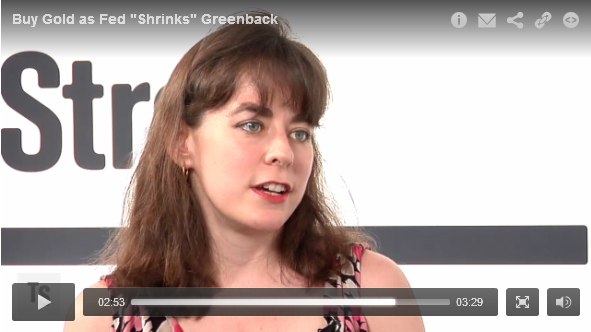


 Posts
Posts

