 | | The Daily Reckoning | Wednesday, June 20, 2012 |
- Another round of QE...stimulus...shameless money printing...
- The case for socialism: When effect precedes cause,
- Plus, Bill Bonner on flying an economy until the wings come off and the terrible affliction of Nobel Prize winners...
-------------------------------------------------------
External Advertisement
URGENT GOLD EVENT: This could occur in less than 24 hours
We’ve just received information from a very credible source in the gold industry. It concerns an event that could be the single most profitable opportunity of the year in the gold industry... Potentially worth $100,000 or more to you. Click here to access the details.
|  | | | | The Benefits of a Bountiful Oil Supply | | |  | | Joel Bowman |
Reckoning today from Stavanger, Norway...
Mercedes...Mercedes...Volvo...Mercedes...BMW...Mercedes...Volvo...
We were waiting for a taxi outside Oslo’s central train station on the weekend. Not since our dusty stint in Dubai had we seen so many luxury vehicles in a row, all with a meter and a foreign driver, waiting to shuttle the locals around town.
Norway is an expensive place to be. Unless you have the good fortune (literally) of being Norwegian. Tiny, one-bedroom houses on the outskirts of town start at roughly half a million dollars. A round of drinks for four at a pub will eat up most of a $100 note. And oysters down by Oslo’s main pier (admittedly some of the best “Rolls Roysters” we’ve ever tasted) sell for $7 per...um...slurp.
Sitting in the back of the taxi, looking out the window at all the sleek stores and grand old hotels along the famous Karl Johans Gate, we began wondering how a cab driver could afford to live in such a place. Then we arrived at our hotel...barely a five minute drive from the station.
“That’ll be 150 kroner,” said the driver, in perfect English. Our European readers will recognize that amount as about €20. Americans may call it $25. Ah...so that’s how. When it came time to depart the capital, we paid ourself $25 to walk back to the station. Easy money.
Of course, it wasn’t always this way. A little more than half a century has passed since Phillips Petroleum Company (since merged with ConocoPhillips) discovered the Ekofisk oil field in the North Sea. Production began in 1971 and was followed by a slew of other fruitful discoveries, both of oil and natural gas. Since that first well was sunk, Norway’s GDP, adjusted for inflation, has more than quadrupled. Happily for this northern nation, Norway also derives 99% of its domestic energy consumption from hydropower. Nice source...if, again, your geography allows for it.
As of March this year, the total value of Norway’s Sovereign Wealth Fund (SWF) was NOK 3,496 billion ($613 bn) — the world’s largest. Officially The Government Pension Fund of Norway, the fund derives its wealth not from pension contributions, but primarily from oil revenues, including taxes, dividends, sales revenues and licensing fees. Norwegians refer to it simply as Oljefondet, or “The Oil Fund.”
This vast wealth has allowed the Norwegians to indulge in that most costly of economic experiments: Socialism. Proponents of this sadly persistent model of welfare statism like to point to the “Nordic Model” as proof that their tax-and-spend philosophies work. As usual, they confuse cause and effect. Norway’s riches are the result of oil, not socialism. Wealth comes from revenue, savings and capital formation, in other words...not from spending, public works and redistribution. Norway’s oil riches make the case for socialism as well as Abu Dhabi’s riches make the case for oppressive medieval sheikdoms — i.e., poorly to not at all.
Fortunately for Norway — and conveniently for reality-averse advocates of the welfare state — the North Sea’s hydrocarbon bounty is not about to run out overnight. Although production from the North Sea’s largest field, Statfjord, has been in steep decline since the mid ’90s, revenue continues to pour in from smaller, surrounding deposits. Conservative estimates predict the fund may reach $800-900 billion by 2017 — roughly $200,000 for every ridiculously attractive member of the population.
As regular reckoners know, however, the state is always and everywhere working to misdirect capital, to distort markets and to indulge folly. This is true no matter how joyous its people, how scrumptious its seafood, how picturesque its fjords.
In today’s “guest video clip,” Byron King, editor of the Energy & Scarcity Investor, explains how the growing cost of maintaining welfare states in various oil producing nations around the world is contributing to a long term “price floor” under the world’s preferred energy source. Please enjoy Mr. King’s always insightful observations...
| | | | | Byron King’s Energy and Scarcity Investor Presents... |
Europe is the last place your attention should be right now...
When Greece’s debt crisis first shook the world in 2010, people were so preoccupied by headlines about Europe many of them missed out on the big early gains being generated by America’s explosive shale boom...
Now that same distraction could cause them to miss out on an even bigger moneymaking opportunity.
Forget about France, Germany, Greece and Spain for a moment — something far more unexpected, important and life changing is about take place right here at home...
Click here now to see what it is.
|
| |
| | The Daily Reckoning Presents | | Politicized Oil Prices | | | Byron King appeared on RT’s Capital Account with Lauren Lyster recently to discuss a variety of energy-related topics. And, as we expected, he had a plethora of insightful things to say about everything from peak oil to rare earths. But what he said about the political aspects of oil production was pretty incredible. Check out what he had to say, below.
Editor’s Note: With myriad contributing factors to fluctuations in energy prices, it can be difficult to decipher where things are headed. That’s why we constantly find ourselves checking in with Byron King’s Energy and Scarcity Investor. Over the years his unique insight has proven invaluable to his loyal following of readers. And his latest report is no exception...
In this incredibly timely presentation, Bryon explains why, on June 25th, 2012, “your expectations for America — and our future — may change in a way you never thought possible.” We urge you to check out this crucial new report as soon as you can. Click here to access it now.
| | | | | Russia and Saudi Arabia Never Saw It Coming! |
You won’t believe which nation analysts at Wall Street’s biggest banks expect to become the world’s biggest energy producer within 5 years...
Click here to see who’s set to become the new king of oil — and the effect it will have on America... our economy... our future!
|
| | | | | And now over to Bill Bonner, with the rest of today’s reckoning from Baltimore, Maryland... | | Getting Ready for More QE | | |  | | Bill Bonner |
Are you ready for this, dear reader...? Well hold onto your hat because here comes another round of QE...stimulus...money printing...! Société Générale economist Michala Marcussen says it’s coming. Today! Here’s Bloomberg on the case:
A third round of quantitative easing is coming this Wednesday, top Société Générale economist Michala Marcussen says.
Marcussen writes that if anything, the boost will help “only at the margins.”
“We have long held the view that each new round of QE comes with diminishing returns,” she says. “We nonetheless see the impact as positive — if nothing else giving the reassurance of a pilot in the plane.”
On how the Federal Reserve will announce and implement QE3:
With economic data signalling stall speed growth for the US, we expect the Fed to lower its current 2012 growth outlook from 2.7%, narrowing the gap to our own forecast of 1.8%. This — and the risks from the euro area debt crisis — will allow the Fed to adopt QE3 at the June 20 FOMC. We estimate the Fed could extend twist by another $150bn, but our expectation is that the Fed will instead allow its balance sheet to expand a further $600bn, with purchases split 40/60% between MBS and Treasuries. |
We wouldn’t want to be on that plane! There are a bunch of clowns at the controls. And the motors are sputtering.
Reassurance? We’d be more reassured if we saw the pilot and co-pilot both bailing out.
But they’re determined to keep flying... until the wings come off.
Lest you think the Fed is doing some kind of public service...like delivering the mail to far outposts in Alaska...you should realize that they’re delivering money...cash...to their friends and business partners. RT reports:
Bank Board Gave US $4 Trillion in Loans to Its Own Institutions
A report just released by the US Government Accountability Office explains how the Federal Reserve divvied up more than $4 trillion in low-interest loans after the fiscal crisis of 2008, and the news shouldn’t be all that surprising. When the Federal Reserve looked towards bailing out some of the biggest banks in the country, more than one dozen of the financial institutions that benefited from the Fed’s Hail Mary were members of the central bank’s own board, reports the GAO. At least 18 current and former directors of the Fed’s regional branches saw to it that their own banks were awarded loans with often next-to-no interest by the country’s central bank during the height of the financial crisis that crippled the American economy and spurred rampant unemployment and home foreclosures for those unable to receive assistance. — RT |
But most people don’t know or care. They’re still lining up to get on board. No kidding.
Even with all that new money filling the bankers’ pockets, apparently it ain’t enough. Again, Bloomberg is on the story:
...there may actually be a shortage of dollars to meet demand as Europe’s debt crisis deepens and the global economy slows. The dollar has risen 3.5 percent since the end of April against a basket of the most-widely traded currencies even amid speculation that the Fed, which meets this week, may undertake the type of stimulus measures that weakened it in the past.
“The market often assumes that people are long dollars, but many of those dollars are held by central banks, which are unlikely to move out,” Ian Stannard, head of European currency strategy at Morgan Stanley in London, said in a June 13 interview. “That leaves us with the private sector, which is short,” meaning they don’t have enough of them, he said. “In an environment where we see a global slowdown, the dollar will be well supported.”
Morgan Stanley says the potential scarcity of dollars among foreign private borrowers represents the US’s net position with lenders abroad of minus $2.4 trillion, adding $4.8 trillion of US financial assets held by central banks, and subtracting $500 billion of foreign official assets held by the US.
That equals about $2 trillion of demand from foreign private banks and companies. The gap has expanded from $400 billion in 2008, according to the New York-based firm. In 2002, there was a dollar surplus of $900 billion, the data show.
“We expect the dollar to continue to strengthen in the coming months on risk aversion stemming from the euro crisis,” strategists at the investment banking unit of Charlotte, North Carolina-based Bank of America Corp., wrote in a research report dated June 15. |
But we’re an equal-opportunity blog, here at The Daily Reckoning. So let’s hear from the other side...
What’s wrong with these Nobel Prize winners, anyway? Does the award cause brain damage? Inquiring minds want to know.
Take Paul Krugman...please!
And here comes Joseph Stiglitz. He’s got a new book out. Here’s an extract:
Markets have clearly not been working in the way that their boosters claim. Markets are supposed to be stable, but the global financial crisis showed that they could be very unstable, with devastating consequences. |
Huh? Who said markets were supposed to be stable? Did Stiglitz just notice that prices go up and down...sometime in a very robust way.
Here, at least he is on more solid ground:
The bankers had taken bets that, without government assistance, would have brought them and the entire economy down. But a closer look at the system showed that this was not an accident; the bankers had incentives to behave this way. |
Then, he seems to get in over his head...
The poor man seems to have no interest in how those incentives came to be. A dear reader might want to pass this along to him:
Wall Street’s perverse incentives...inequality...and the financial markets’ recent extreme instability all have the same source — the feds. Their ersatz money led to an extreme increase in the amount of credit. Total credit in the US rose 50 times in the last 50 years.
Wall Street had an incentive to peddle credit to everyone — even those who couldn’t pay back their loans.
Wall Street makes money by dishing out credit...the more they dispense, the more they make. A disproportionate amount of this new credit goes to their customers, their clients, and their cronies — that is, to the ‘rich.’ That’s why the rich are so rich. Because their financial assets went up in price faster than consumer prices or labor rates (both held down by outsourcing to emerging markets).
As for instability, what do you expect when you have a monetary system that allows credit to expand many times faster than the real economy? And what happens to an economy when money itself can’t be trusted? Try this experiment; let carpenters build your next house with an elastic tape measure...or let pilots fly planes with whacky instruments...or set the escalator at the shopping mall to go faster and faster. You’ll see plenty of accidents there too.
What is wrong with Stiglitz? Markets soar when the Fed hints at more money...and crash when it hints that it will sit still. And Stiglitz blames the markets for instability! When you operate with an elastic currency...and you expand credit 50 times in 50 years...you have to assume that the financial world will get a little ‘toppy.’ Then, when it falls over, he seizes the opportunity to tell us that markets need to be controlled by the same people who gave us the credit bubble:
...markets once again must be tamed and tempered. The consequences of not doing so are serious: within a meaningful democracy, where the voices of ordinary citizens are heard, we cannot maintain an open and globalized market system, at least not in the form that we know it, if that system year after year makes those citizens worse- off. One or the other will have to give — either our politics or our economics. |
That’s chutzpah...that’s cheek...that’s brass! Or brain damage.
Regards,
Bill Bonner
for The Daily Reckoning
-------------------------------------------------------
Here at The Daily Reckoning, we value your questions and comments. If you would like to send us a few thoughts of your own, please address them to your managing editor atjoel@dailyreckoning.com
|
|
|
|

 The Daily Reckoning U.S. Edition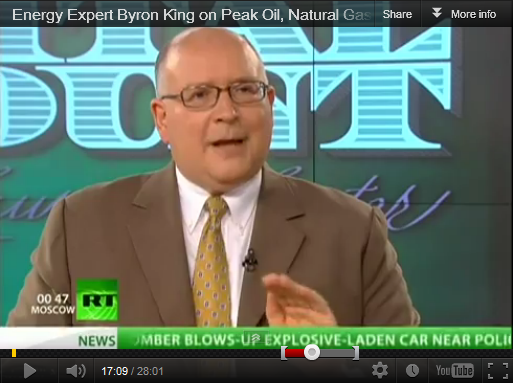


 Posts
Posts

