
Saturday 7 July 2012 Saturday 7 July 2012 Friday 6 July 2012
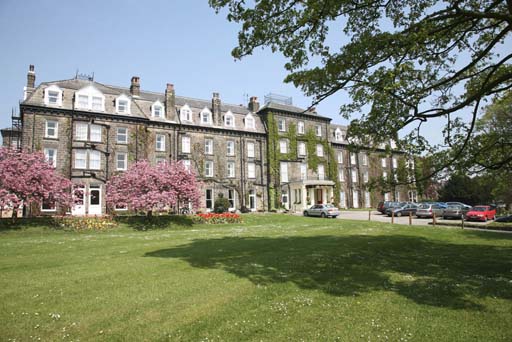
Harrogate conference: one week to go
By coincidence, we see today, a piece in The Guardian headlined: "British democracy in terminal decline, warns report". It trails the recently published 2012 Democratic Audit, produced by the organisation Democratic Audit.
In terms of a communication exercise, the report is a joke. It is 463 pages long, that alone ensuring that few people will read it. It is badly presented, incoherent, poorly structured and, by and large, misses the point – especially in its headline assertion. We do not have and never have had a democracy. It cannot, therefore, be in decline, terminal or otherwise.
What we do have, of course, are the vestiges of a poorly constructed "representative democracy", which means – in theory only – that power is held on our behalf by Members of Parliament whom we hold to account in periodic general elections.
The "Democratic Audit" report is worth mentioning though because it illustrates what we are not trying to achieve. This it does by parading what it considers are the "many positive advances" over the last ten years: stronger select committees of MPs holding ministers and civil servants to account; devolution of power to Northern Ireland, Scotland and Wales, and publication of much more information about politicians' expenses and party donors.
Looking at this very short list (which in the full report includes "advances secured through the Equality Act 2010"), there is nothing there which gets to the root of democracy – power. Define democracy and this becomes obvious – the literal translation from the Greek means "people power".
In assessing whether we have a democracy, therefore, the real and only question to ask is whether we, the people, have power. And that is not easy to answer, which is why organisations such as Democratic Audit avoid asking it.
Part of the answer is "yes", we do have some power. Some have more than others, and there is never going to be equality on this matter. But there are other questions.
For instance, do we, the people, actually want power, or more power than we have? And if we had more power, would we know how to use it? Even if we did know how to use it, could most of us be bothered to exercise it?
Power, of course, is difficult to define. It is never static and, when it comes to transfers of power, the old aphorism applies: it is taken not given. If the people wanted more power, they would take it. Arguably, because they do not, it could be asserted that they do not want the power, or not enough to make the sacrifices needed to acquire it.
Thus, the task we are setting ourselves next Saturday is not easy. But the important thing is to keep hold of the central issue: democracy is about power – who holds it and under what circumstances and controls, and how to get more of it. On each of the next six days, I will explore these issues, to help next week's deliberations.
COMMENT THREAD
Richard North 07/07/2012 German tanks on sale, while Britain can't make rifles

Why is it, then, that we see from Handlesblatt that the Germans, while avoiding any "high end" military engagement overseas, are still in a position to market their Leopard 2 Main Battle Tanks overseas?
This has come to light with details emerging of the Germans sending an Army staff officer to Saudi Arabia in a bid to sell them at least 270 Leopard 2A7 tanks – the most modern type in the armoury.
The Greens have been squealing that the sale of tanks to this authoritarian desert state would be unacceptable, and also complaining that it is not the task of the armed forces to support export sales for the defence industry.
Be that as it may, while the German Army is contracting in much the same way as the British force, the Germans still manage to maintain this core part of their manufacturing capability. I suppose the real difference is that the Germans are not lumbered with BAE Systems, who have dispensed with both rifle and tank manufacturing – and much else besides.
With friends like these, who needs enemies?
COMMENT THREAD
Richard North 07/07/2012 The myths that Churchill made

This piece, with a timing dictated by Irish events, addresses "vast falsehood" created by Churchill that in 1940, Hitler wanted to invade Britain. Says Myers, quite bluntly, "he didn't". He actually admired the British Empire, with its inherent presumption of racial superiority.
Furthermore, says Myers, "We know from the diaries of Lord Halifax, the British foreign minister, that Hitler offered terms that did not involve German control of Britain. Churchill refused to allow these terms to be read to the cabinet, and they remain prudently concealed under the 100-year rule".
"Instead, Churchill's determination to keep Britain at war turned what had been merely a continental defeat of its army into the enduring myth that in 1940, Britain faced a war for national survival".
Had I read such a few years ago, I would have been both scandalised and dismissive, but the experience of writing The Many Not The Few changed all that. I am at one with Myers that Hitler certainly did not wish to invade Britain and only permitted the assembly of an invasion fleet as a last resort. His main effort was directed at coercing the government to sue for peace.
But what is particularly refreshing about the Myers is that he looks at the technical detail of this the "invasion fleet" that the Nazis began to assemble in the summer of 1940 and concludes that it was no more capable of invading Britain than it was Hawaii. It was, he says, "war by illusion: its purpose was to get the British to the negotiating table". He then writes:This "fleet" consisted of 1,900 canal barges, only one- third of which were powered, to be towed cross-channel, in clusters of three, by just 380 tugs. These barges had tiny keels, blunt prows and small rudders, with just two feet of freeboard: the distance between the water and the top of the hull. They would have been swamped during even a direct crossing of the English Channel, a shallow and violent waterway linking the raging North Sea and Atlantic. But an invasion would not be direct. The barges, with their untrained crews, would be able to make only about three knots, from the three "invasion" centres: Rotterdam, Le Havre and Boulogne. These ports are, respectively, from any south-coast landing beaches, at best, 200 miles and 60 hours, 100 miles and 30 hours, and 50 miles and 15 hours, with seasick soldiers crammed into keel-less floundering barges without toilets or water. What army would be fit to fight after a journey like that? And then there's the 55,000 horses that the Wehrmacht would need: its transport was still not mechanised.
This and much more, Myers uses to illustrate that, in practical terms, an assault on defended beaches was simply not a practical proposition, a conclusion which the Germans themselves had reached by mid-August, long before the invasion was supposed to have been cancelled because of intervention by Fighter Command.
When I was researching for my book, what particularly captured my interest was the mechanics of unloading the barges and the transports. As opposed to the D-Day landing craft which we used, in the summer of 1940, the barges were particularly cumbersome.
According to a detailed study by German author Peter Schenk, to place the ramps and unload vehicles required a team comprising an engineer NCO and four engineer troops, plus sixteen infantry – as the pictures illustrate, this is hardly something one could countenance on a defended beach.
Furthermore, the barges could only be unloaded on a falling tide, but it could be half an hour or so between beaching and the tide dropping enough for lorries to be put ashore. And then it would be eight hours or so before the tide returned and the barges could be refloated, making them perfect targets for shore defences. 
As to the transport ships, trials indicated that it would take two days to offload their cargoes and deliver them to the beaches (the morning of S-Day plus 2). Only the first assault could be thus delivered and it would be S Day plus 4 before the remainder of the first wave, and the second wave, could be handled.
Myers, as do I, thus concludes that just about everything that people believed about Hitler's intentions towards Britain in 1940 - and still believe today - was a myth created by Churchill, which he probably came to believe himself.
Consider all the facts above, Myers writes, and then consider how that myth has endured, despite them. Makes you wonder, no?
COMMENT THREAD
Richard North 06/07/2012
Saturday, 7 July 2012


 Posts
Posts

