

Eurocrash: rumours, rumours
Wednesday 3 October 2012
 The possibility was briefly raised here in mid-August, but we saw this firming up towards the end of September after a report in Bild, and the possibility now again finds space in Handelsblatt. Now, helpfully, we find an English-language report in Spiegel International, which cites our old friend prof. Clemens Fuest saying that the ECB has overstretched its mandate. Another commentator, Peter Bofinger, a monetary expert at the University of Würzburg, adds his pfennig's-worth, noting that the ECB was making itself dependent on the decisions of politicians and on the bailout fund. "In doing so", he says, "the ECB is increasingly getting into dangerous territory". Despite this, there is no actual evidence that the Bundesbank is preparing any action, so we remain in the domain of smoke and mirrors which continues to plague this issue. Another batch of rumours concerns whether – or when – Spain will make a formal application for a bailout, with some saying it is about to happen, while others – and especially the Spanish government – denying it completely.
Meanwhile, German SDP chancellor candidate, Peer Steinbrück, is putting up plans for the enforced splitting of retail banks and their "casino" operations, with the apparent approval of the EU commission. And although many in Britain might like this idea, it is bound to cause an amount of perturbation.
That suggests that we are no further forward than we were last week, other than the fact that the euro has survived another week. Soon the autumn European Council will be upon us, and then we will have the December council, with the "colleagues" saying "we're still here! ". And all we have to go on is rumour and speculation. Nothing much changes. COMMENT THREAD Richard North 03/10/2012 |
Energy: the failing revolution
Tuesday 2 October 2012
One cannot help but be impressed, in following the German press, by the amount of copy on the "energy revolution", as we move closer to the EU-inspired wet-dream of a "decarbonised society".
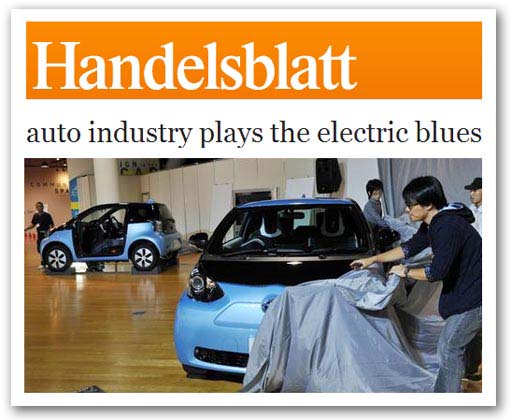
Even then, while there is a high volume of articles (far more than you see in the trivia-obsessed British media), there is no great clarity or transparency, and we lack a clear statement of the objectives driving energy policy, leaving us to wonder at the stupidity of a policy which seems determined to leave us in the cold, with the lights out. However, just occasionally, one gets a flash of insight from which the understanding of a particular subject takes a leap forward, instilling clarity where before there was confusion and mystery. One of those came with our piece on Bornholm, in Denmark, where the "smart grid" is being trialled. It was from this that I finally understood that a key objective of the greens is to reversing the current supply paradigm. Instead of electricity being produced to meet demand, demand is to be manipulated – at a micro-level – to match the supply available. Then along comes another piece, this one from Roger Harrabin of the BBC, praising "liquid air", which "offers energy storage hope". This mad idea revolves around using "wrong-time" electricity generated by wind farms at night to chill air to a cryogenic state at a distant location, which is then used to drive turbines during peak periods. The reason this is mad is because, on its own, the process is less than 25 percent efficient, and since wind farms only average about 25 percent efficiency, we are taking about an overall system capability of around six percent. And when you think that distant wind farms can suffer transmission losses of ten percent or more, the net contribution becomes a negative value. However, the article's flash of insight comes with Richard Smith, head of energy strategy for National Grid, saying that: "Storage is one of four tools we have to balance supply and demand, including thermal flexing (switching on and off gas-fired power stations); interconnections, and demand-side management". Thus does the master plan begin to become apparent. Erratic and unpredictable renewables will be "balanced" in part by gas-powered back-up, then by storage, inter-connectors, and the "demand-side management", majoring on the so-called "smart grid". A programme of building gas-powered electricity plants is now well under way and, not exactly under wraps, but not particularly highlighted either, is the inter-connector programme, which is also well-advanced. Last week, according to the Financial Times (no link), Britain and Ireland turned on the first electricity interconnector between the countries on Thursday. This was to allow surplus Irish wind power to help the UK meet its green energy targets. The €600m connection, running beneath the Irish Sea, marked – we were told - "a step forward in efforts to build a high-voltage network joining Britain and its neighbours". Such is the master plan that links have been devised to "allow the UK to import green energy in support of its carbon reduction goals and export electricity when there is a surplus". Returning to Richard Smith, however, we see the focus on storage and learn that "other sorts of storage would be increasingly important in coming decades and should be incentivised to commercial scale by government". Again not fully realised is the role of electric cars here. To you and me, they are a particularly inefficient and expensive form of transportation, but the master plan sees them as an absolutely vital energy storage facility - a highly dispersed network of batteries to soak up "wrong-time" electricity generated by wind farms. And there does failure stare the planners in the face. An article in Handelsblatt today (illustrated – top) has the auto-industry "playing the blues". In Germany, despite billions in investment, the 2020 goal of one million electric cars is "not in easy reach". After 18 years of development, the article says, there are only 4,600 electric cars on the road, equivalent to 0.01 percent of registered vehicles. Thus, it concludes, electric mobility is still a marginal phenomenon. Demand is missing and uncertainty is back. Much the same is happening throughout Europe, leaving a huge gap in the regional energy strategy, one that cannot readily be plugged. The Germans thus might be hailing the energy revolution, but it is a failing revolution. COMMENT THREAD Richard North 02/10/2012 |


 Posts
Posts

