

Fisheries policy: widening the circle of ignorance
Thursday 7 February 2013
 This is a terribly boring way of putting something that has the BBC proclaiming: "Euro MPs back large-scale fishing reform to save stocks", which may be (almost literally) correct, but not technically so.
One thing is for certain though. We are recording the first of the first. It is the first time MEPs have been allowed to vote on the CFP, after it was converted to "co-decision" (now known as the ordinary legislative procedure) by the Lisbon Treaty. With that, approval become a joint responsibility of the European Parliament and the Council.
It is also the First Reading, which has been followed by a vote, but the MEPs have not approved "the package", as the BBC puts it. They have agreed a 336-page report which includes 60 substantive amendments amounting to nearly 180 pages of text. It is this which forms the Parliament's "position" and separately, as can be seen from the legislative observatory, the Council has also conducted its own debates, and will have produced its own "position". The procedural detail is necessary here, in order to be able to understand the greater drama to come. In short time, the two "positions" must be reconciled through a series of negotiations (called trilogues). The end result must be a draft "common position", jointly agreed by the two institutions, which must not deviate so far from the original proposals that the Commission decides to pull the plug. This is where it gets interesting. There are so many amendments, and substantive differences between the Parliament and the Council, that it is very hard to see how the two sides are going to be reconciled. Both are going to have to compromise, but we have no track record on which to base assumptions as to whether that will happen. This could go through smoothly, or it could end up in a cat fight, with the draft legislation failing to become law.
All that fun is to come.
However, if the proposals pass in their current (or any) form, they will presage another long-term disaster, to add to the long-running train wreck which is the CFP. Despite glad claims that the aim is to "restore fish stocks and return profitability to fishing communities", the reform "package" will do neither – even though the headline issue of "discards" is being tackled, preventing in due course unwanted fish being thrown back into the sea. 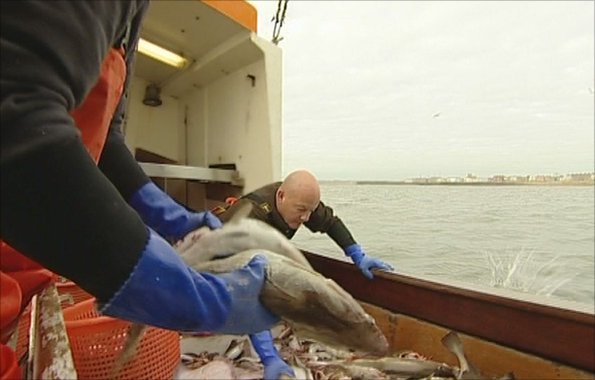 The big problem is not so much the discards (those are the symptom), but the system of quotas that produces them. If the fishermen have quotas for different species in a mixed fishery, and they bring up fish for which they have no quota when fishing for another species, then they cannot exploit the over-quota fish commercially. They must be discarded, whether at sea or once they have been landed. Here, there is no relief in sight for, while there is to be a different way of calculating the quotas, which are to be based on Maximum Sustainable Yields (MSYs), rather than the Total Allowable Catch(TAC), the difference is more cosmetic than real. Both are still systems of limiting fishing effort based on imposing pre-emptive tonnage limits on target species. In fact, contrary to the thinking which allows for fixed MSYs to be be imposed, actual yields from any fishery are infinitely variable and rarely predicable. In any properly managed fishery, MSYs are thus far too insensitive tool by which to control the fishing effort. Specifically, the capacity of a fishery is primarily determined by the food supply, and the more sensitive regimes rely on a series of different techniques to keep fish stocks and food supply in balance. Such regimes do not rely on laborious annual sampling of fish populations (which is notoriously inaccurate, and often out-of-date by the time the data are collected and processed), and contentious methods of stock estimations. Instead, one sees a great reliance on real-time monitoring, including continuous measurements of food stocks, fish condition and population structures, backed by extremely flexible and rapid programmes of fisheries closures when stocks start to fall outside acceptable parameters. 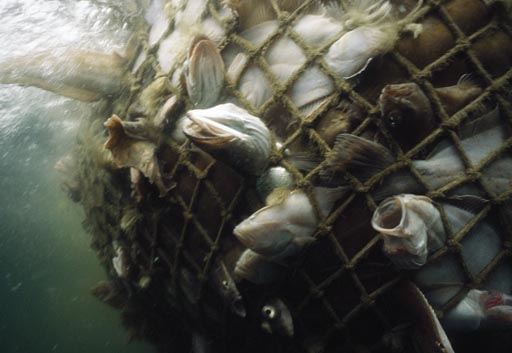 On the other hand, in a marked divergence from EU-based regimes, when food is short, the fishing effort is often increased. This is to keep the population in balance with the food supply, maintaining a smaller, healthy population, rather than larger numbers struggling to survive. Similarly, when the population structure becomes unbalanced, juveniles may be targeted - an anathema to EU planners. What we found when we studied such things was that, when employing the wide range of tools needed for effective fisheries management, use has to be tailored specifically to the conditions of each fishery. The effect is then to end up with a series of management regimes, unique to the geography and biology of their regions, each tailored specifically to the conditions in the water. In our researches, however, I interviewed senior Commission officials responsible for fisheries policy. Quite candidly – albeit in private – they admitted that their centralised system simply does not have the legislative and administrative capability to devise tailored regimes for each fishery, and then to monitor and regulate them. Furthermore, any such decentralised scheme would confound the very concept of a commonfisheries policy. In European Union terms, this would be politically unacceptable. The Commission must work on the basis on centrally dictated fishing effort, which necessarily requires a quota system. The politics come before performance. For sure, the current system can be better-managed, and there are some attempts to ensure that this is the case, but these are superficial "tweaks" compared with the fundamental flaws which remain in the system, unchanged. 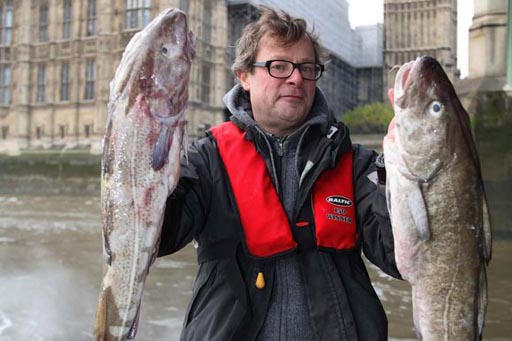 Needless to say, Roger Harrabin, "environment analyst" for the BBC, sees things differently. He says the vote yesterday was "something of a victory for citizen power, following organised lobbying of MEPs by ordinary people, as well as by high-profile celebrity chefs and environmentalists". In fact, it was no such thing. Instead of being managed by the Council, where the ignorance about effective fisheries management was confined to a small group of Commission and Council officials, with national ministers let in to play once a year, the net effect of the changes is to give more players a part in setting a fundamentally unsound policy. All the EU has achieved is to widen the circle of ignorance. Sadly, however, they have also bought themselves time. With the full changes – if they are finally approved – not to be implemented until 2020, it will then take time to assess the effects. By the time it is realised that nothing very much has changed and the CFP is still a train-wreck, new players will be in the field. The Commission can then start all over again, with a new line in propaganda. For the time being, though, they can revel in laudatory headlines from idiot chefs (one pictured above), who will be long gone by the time the effects of their stupidity become apparent. COMMENT THREAD Richard North 07/02/2013 |
EU politics: the soft centre at the heart of darkness
Wednesday 6 February 2013
 Looking briefly at the CoE, this is based in Strasbourg, and even to visitors it often attracts little attention. Apart from the fact that it has a better staff restaurant – and some useful overspill facilities - we didn't take a great deal of notice of it when we were in Strasbourg. Even though it was connected to the European Parliament by a bridge, and we often passed through it on the way to our offices, it was just "there", a relic of the past, of little importance. To look at it in that way was and is a mistake. The Council of Europe, bearing the same ring of stars which was later stolen by the European Union, is a powerful institution in its own right. Its problem is that it is entirely under the shadow of the EU, but it should not be underestimated. It acts in a very different and much more subtle (i.e., less visible) way. For a start, the Council of Europe, itself a treaty organisation, is a treaty factory, having brokered 214 treaties including its founding statute which came into force on 3 August 1949. What might surprise people, as well as the sheer number, is the breadth of these treaties. In additional to the Convention for the Protection of Human Rights and Fundamental Freedoms – to give it its full title - (and its various protocols) we have such things as the European Convention on Social and Medical Assistance and the European Agreement on the Abolition of Visas for Refugees. We also have the European Social Charter, the European Convention on the Control of the Acquisition and Possession of Firearms by Individuals, the European Convention for the Protection of Animals for Slaughter, and even the European Agreement on the Restriction of the Use of certain Detergents in Washing and Cleaning Products. More recently, we have the Council of Europe Convention on Laundering, Search, Seizure and Confiscation of the Proceeds from Crime and on the Financing of Terrorism, the Council of Europe Convention on preventing and combating violence against women and domestic violence, the Council of Europe Convention on the counterfeiting of medical products and similar crimes involving threats to public health, and the European Landscape Convention. Careful study of the list, and an examination of the recitals of many EU directives, indicates that much of the EU law about which we and our politicians complain owes its origin to Council of Europe treaties and their protocols. Perversely, even if we left the EU, we would still be bound by provisions which cause friction, unless we also abrogated many of the CoE treaties. But, to cast the reach of the CoE (or the EU for that matter) simply in terms of its treaties and (in the case of the EU) its formal laws, is entirely to miscast the way the international system works. What is emerging as the system matures and become more complex is a phenomenon well known to international lawyers as "soft law", which is increasingly dominating our lives. The EU agency Eurofound defines soft law as is "the term applied to EU measures, such as guidelines, declarations and opinions, which, in contrast to directives, regulations and decisions, are not binding on those to whom they are addressed". Despite that lack of legally binding effect, says Eurofound, soft law may impact on policy development and practice precisely by reason of its lack of legal effect – rather, because it exercises an informal "soft" influence. Member States and other actors may undertake voluntarily to do what they are less willing to do if legally obligated. Soft law, therefore, is sometimes presented as a more flexible instrument in achieving policy objectives. In the CoE context, it was Recommendation CM/Rec(2010)5 which has cast as "soft law" by the European Parliament Directorate-General for Internal Policies, which nevertheless called it "a significant soft law commitment on rights of LGBT persons". The EU Agency for Fundamental Rights(FRA) thought the recommendation provided "useful guidance" to EU Member States for improving the respect, protection and promotion of LGBT rights. While soft law may not be legally binding, it often creates powerful political pressure, to the extent that it can become politically binding, in a sense. To read through the background to Recommendation CM/Rec(2010)5 tells its own story, giving a strong impression of this being the tip of the spear, with a huge momentum behind it. As to its effect on Mr Cameron, I am warming to the view that the Recommendation was indeed pivotal in bringing the gay marriage to Parliament yesterday. Looking at the sequence of events, we have already established that there was no intent to introduce homosexual marriage in the coalition work programme of June 2010 and we can see from the media record that, as late as September 2010, Cameron was in talks with his deputy prime minister (pictured below), having refused to consider same-sex marriages.  Then, in December 2010, we see new that gay rights campaigners planning to file a case with the European Court of Human Rights as part of an "Equal Love campaign", arguing that they are being discriminated against because of their sexual orientation. Then, strengthening the effect of Recommendation CM/Rec(2010), we start seeing numerous instances throughout Europe where it is being considered an exemplar or amplifier of Article 8 of the ECHR (right to a family life). Politically, this placed Mr Cameron in an incredibly weak position, as he had committed in opposition to scrapping the Human Rights Act. Now, potentially, he was facing an dangerous challenge from the ECHR which could force him to overturn his policy on gay marriage. The political effects of that could have been devastating. Thus we see, in March 2011 the government for the first time giving a commitment to implementing Recommendation CM/Rec(2010)5, the outcome of which meant that Cameron had to introduce homosexual marriage. Making a virtue out of a necessity, he thus made implementing the Recommendation the centrepiece of the British Chairmanship of the Committee of Ministers, at the Council of Europe. And the rest, as they say, is history. In all this of course, no one can put their hand on a law or other directive, which forced Mr Cameron to introduce homosexual marriage. But the sequence of events, and the circumstances, provide powerful evidence that the "soft law" of Recommendation CM/Rec(2010)5 was indeed the "tip of the spear" which backed him into a corner, driving him to put his signature on a new Bill. Soft law indeed it may be, the soft centre at the heart of darkness, but just because it is "soft" doesn't mean it doesn't work. A smothering pillow is soft, especially when compared with the casing of a bullet, but it can be just as deadly. COMMENT: "GAY MARRIAGE" THREAD Richard North 06/02/2013 |
UK politics: a contrast in priorities
Wednesday 6 February 2013

Last month's debate on "Europe", led by William Hague, seen addressing the opposition benches.

Last night's debate on "gays" ... the difference being, of course, that there was a vote. MPs are allowed (nay, encouraged) to vote on whether homosexuals can call themselves married, but not on who governs us - even the idea of a debate being actively discouraged for causing "uncertainty".
Little did they know it though, the MPs were actually voting to implement Council of Europe Recommendation CM/Rec(2010)5, to fulfil a commitment made by HM Government last year, while holding the Chairmanship of the Committee of Ministers.
Completely unaware of the real reason for their presence, they were led by the nose, oblivious to the fact that the same "debates" have been taking place all over Europe, to exactly the same agenda.
|


 Posts
Posts

